(Updated: ) · Admin · 2 min read
Sovereign Tech in Crisis: Architecture of the 72-Hour Digital Border System
Legacy Case Study: How we engineered a population-scale digital border control system in 72 hours using secure, sovereign technical infrastructure.

⚠️ SYSTEM NAVIGATION NOTICE
If you were automatically routed here from a legacy application portal address, please note that the historical emergency check-in application has been securely decommissioned and archived.
The Mandate: In 2020, national safety protocols required an immediate, secure solution to manage cross-border operational volumes without exposing citizen data profiles. The timeline: 72 hours from initial code sprint to production rollout.
The Core Challenge: Mass Scale Verification Latencies
Government operational agencies faced a critical technical trilemma: Execution Speed, Core Data Security, and Infrastructure Scale. Out-of-the-box commercial solutions introduced unpredictable data sovereignty risks, while traditional software workflows required months of planning.
Our team was tasked to engineer an isolated, high-availability data system built entirely on local processing infrastructure to act as a secure digital perimeter shield.
The Infrastructure Parameters
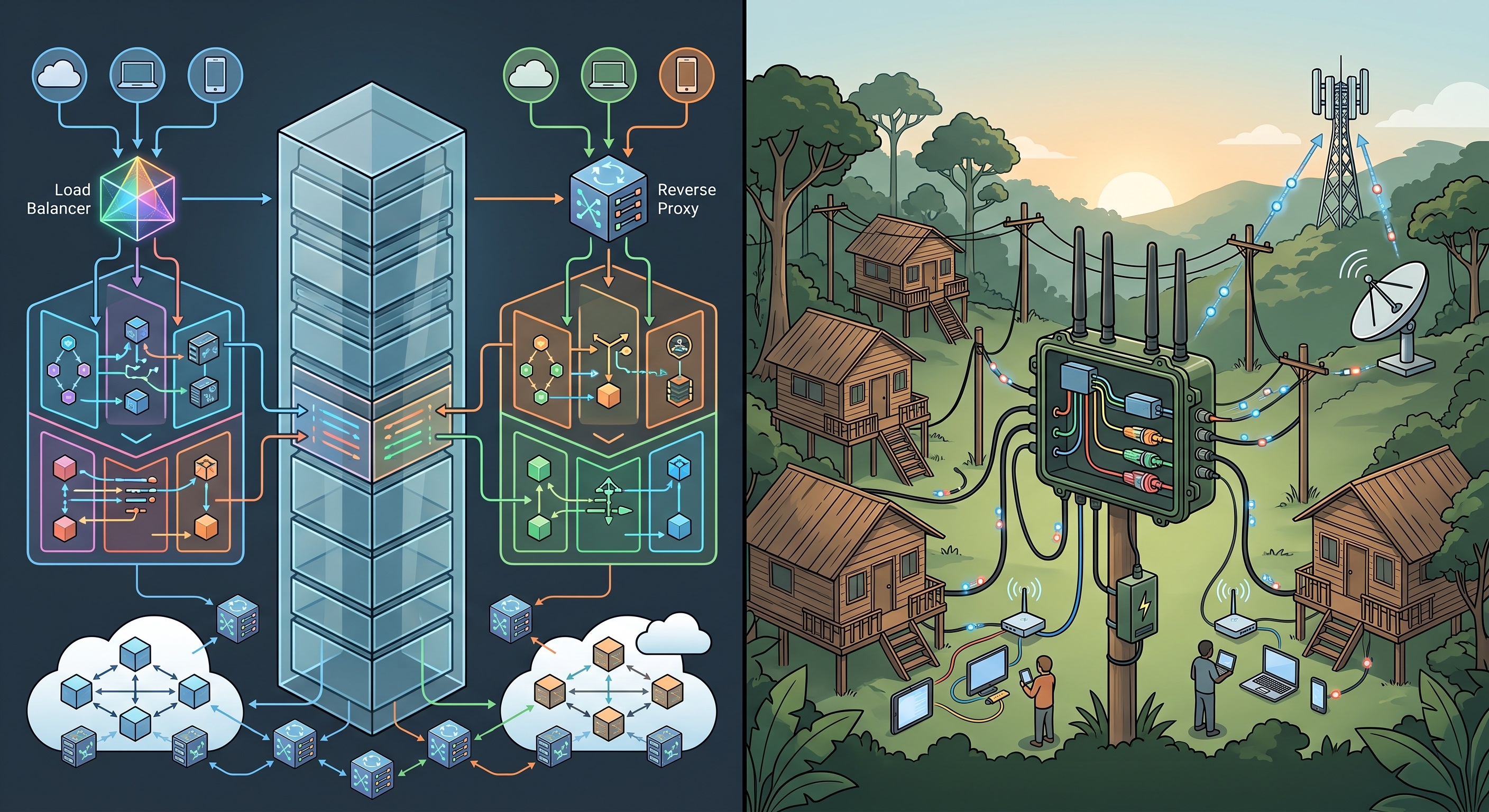
We bypassed traditional procedural bottlenecks by deploying an aggressive, continuous integration staging cycle. The resulting architecture delivered population-scale tracking validations running natively over local data nodes:
- Ingestion Volumetric Performance: Validated greater than 10,000 active scans per hour at peak border checkpoint congestion windows.
- Edge Processing Latency: Secured sub-200ms verification response speeds to prevent physical traveler bottlenecks.
- Data Residency Compliance: Hardwired storage layers to maintain absolute local residency, keeping identity logs partitioned and secure behind an enterprise Cloudflare perimeter.
- Cryptographic Safety: Customer profiles were instantly hashed and encrypted both in transit and at rest using strict tokenized validation matrices.
Interactive Systems Telemetry & Ingestion Simulator
Adjust the load parameters below to observe how our decoupled server backends process heavy transaction loads, evaluating projected latencies and node pool distributions in real time:
Technical Legacy & System Evolution
This crisis engineering sprint proved that sovereign technical infrastructure could be highly agile without sacrificing underlying data security. The project established the structural foundations for our modern, high-availability decoupled layouts.
We have since evolved this low-level tracking framework into an advanced, non-line-of-sight Bluetooth Low Energy (BLE) beacon telemetry tracking array. This modern solution completely bypasses the static limits of traditional QR codes to deliver continuous data persistence under extreme field conditions.
- Sovereign Tech
- Crisis Engineering
- Data Privacy
- IoT Infrastructure