(Updated: ) · Admin · 3 min read
Supply Chain Architecture: Engineering High-Availability B2B Infrastructure via MedusaJS and Docker
A technical breakdown of the Omnia Foods B2B core: Implementing high-performance container persistence, zero-latency edge delivery via Cloudflare, and isolated API dual-domain masking.
Scaling a B2B supply chain marketplace within regional infrastructure limits requires a strict focus on backend predictability. For the Sarawak F&B sector, where inventory data fresh-rates directly dictate cold-chain logistics timelines, system latency and data dropouts represent direct operational losses.
During the foundational engineering phase of the Omnia Foods B2B ecosystem, we avoided generic monolithic deployments. Instead, we architected a decoupled, containerized infrastructure designed for maximum transaction velocity, data persistence, and perimeter security.
The Infrastructure Topology: Edge Routing to Linux Host
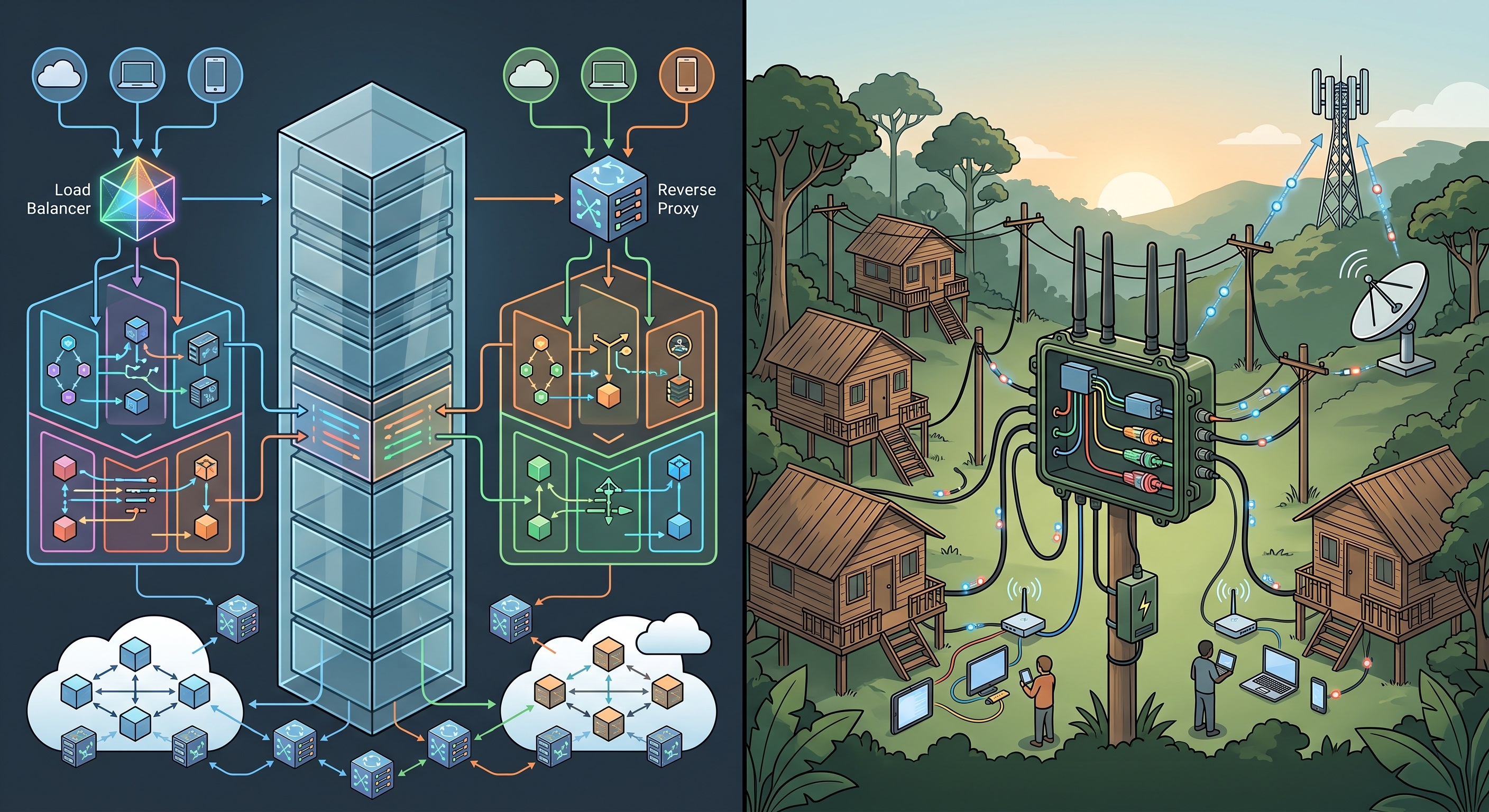
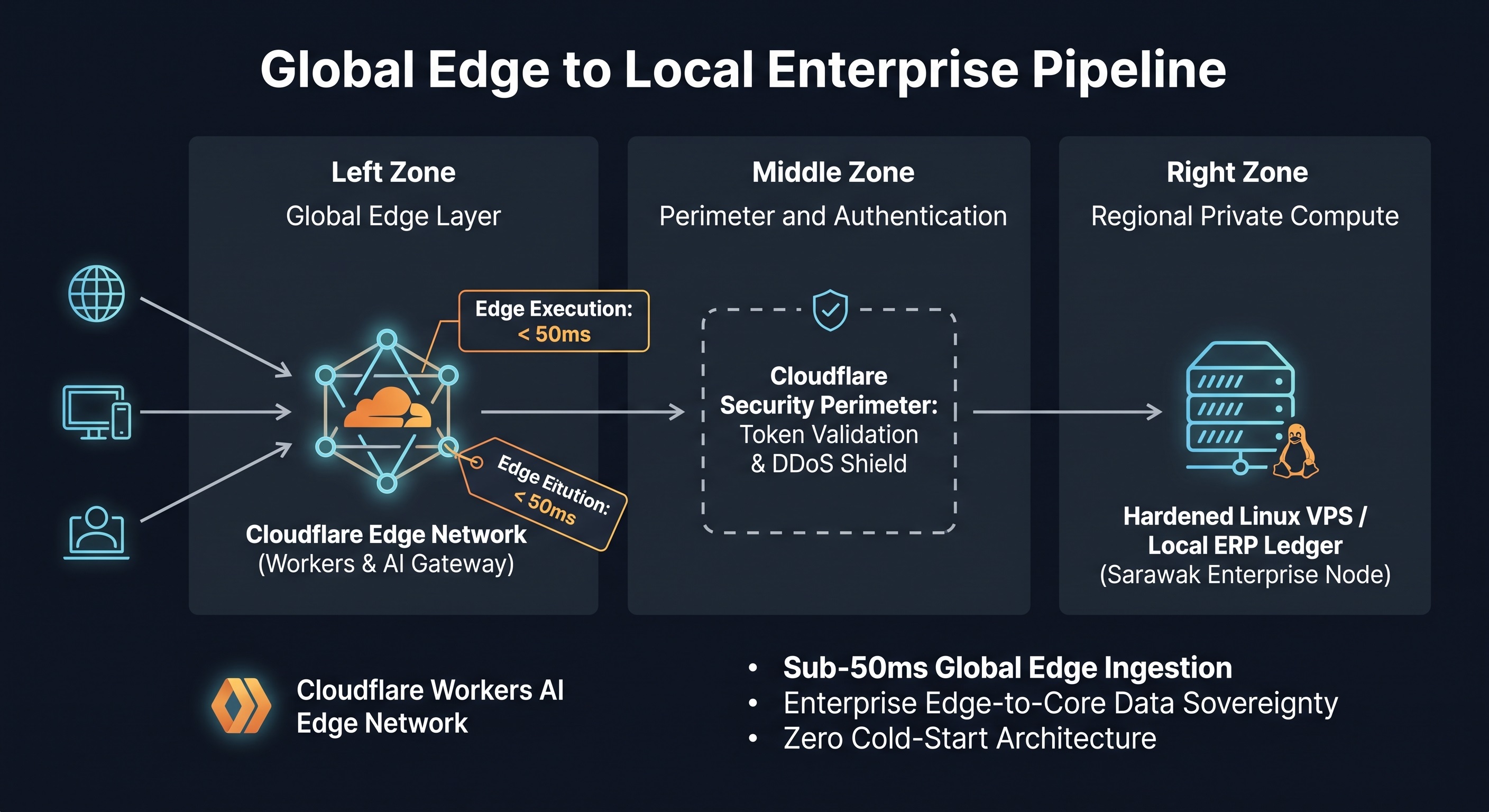
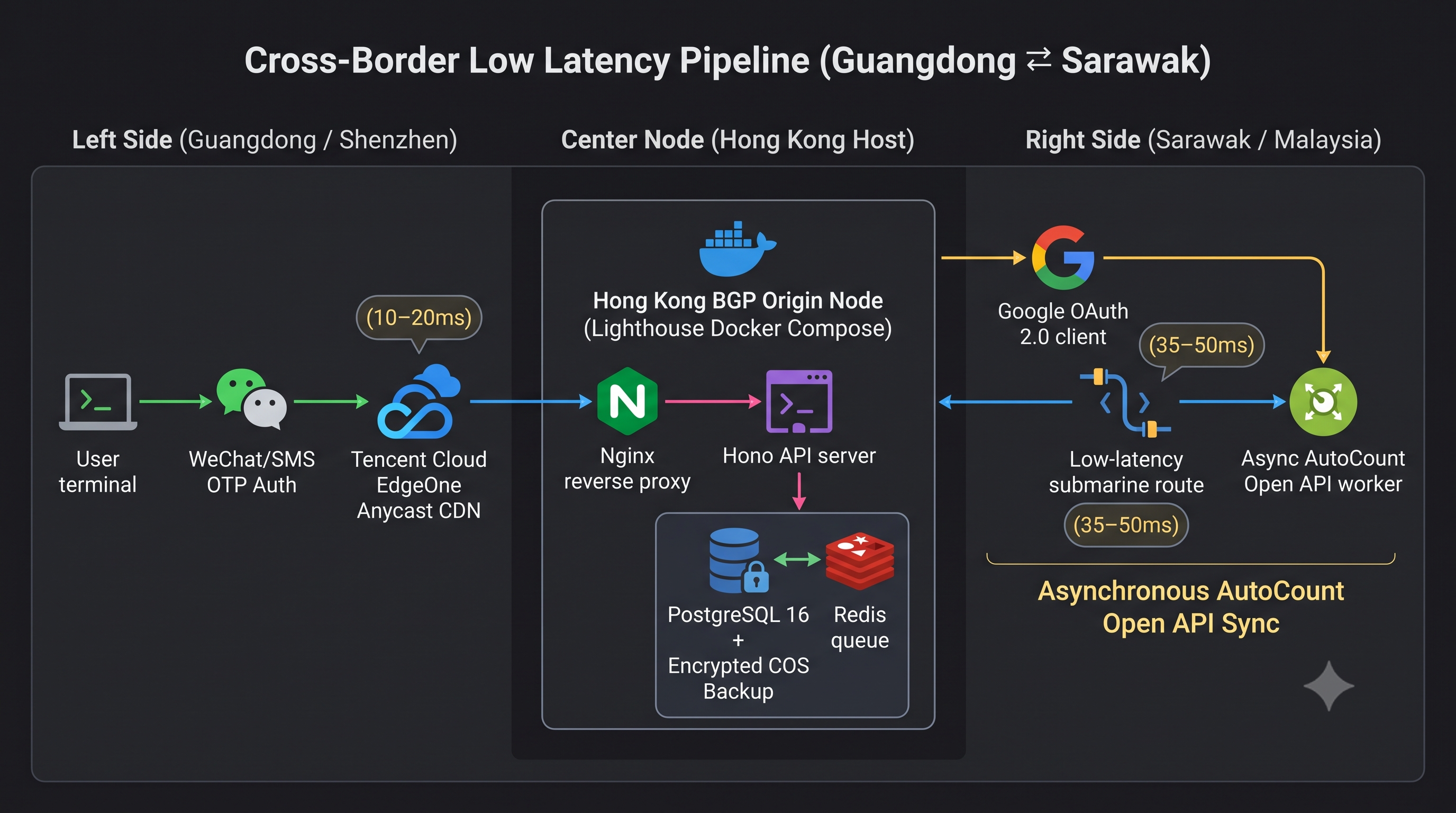
The production architecture is deployed across a dedicated DigitalOcean Droplet Compute Node running an optimized Linux core, protected behind an aggressive Cloudflare Edge Network perimeter.
[Client App] ──> [Cloudflare Edge (Kuching Node)] ──> [Nginx Reverse Proxy] ──> [Docker / MedusaJS API]
By leveraging localized edge routing nodes, we achieve sub-second Time to First Byte (TTFB) across East Malaysia. This network configuration ensures that warehouse managers and procurement officers experience zero interface lag—even when transmitting high-volume orders over erratic cellular connections.
Resolving Container State Persistence
A fundamental challenge of containerized headless environments (like MedusaJS running inside a Docker runtime) is handling ephemeral storage. If an active container crashes or is replaced during an automated CI/CD deployment, any application state written within the container layer is destroyed.
To ensure absolute asset permanence without introducing the latency overhead of early-stage remote network storage, we engineered a high-velocity Direct-to-Disk persistent volume bridge on the host machine.
Core Implementation Parameters:
- Host-Bound Volume Mounts: We isolated high-wear asset directories (such as generated invoices and product media payloads) and hard-mapped them directly out of the containerized environment into the host’s physical NVMe storage layer.
- Cached Asset Delivery: Media assets are served directly from the physical disk layer via an optimized Nginx reverse-proxy cache, combined with Cloudflare’s global edge caching rules. This workflow completely bypasses the Node.js application layer for static file requests, minimizing CPU overhead.
- Decoupled Architecture Scaling: While local NVMe storage satisfies our initial velocity targets, the underlying file-service layout is fully abstracted. This design allows us to seamlessly swap the storage driver to an S3-compatible object storage cluster as transaction volume expands.
Perimeter Security: The Dual-Domain Isolation Strategy
To protect core enterprise logic and inventory management databases from discovery and automated scanning bots, we implemented a strict Dual-Domain Security Layout:
- The Public Storefront Layer: The client-facing web application and static asset catalogs are served via the public-facing domain environment (
PasarNow). This layer handles all standard, non-privileged web traffic. - The Stealth API Layer: The MedusaJS core engine and database orchestrators are isolated on a completely separate, obfuscated private subdomain infrastructure. This endpoint operates behind strict Cross-Origin Resource Sharing (CORS) security guidelines and JWT token validation protocols, rendering the core backend invisible to unauthorized public traversal.
The Operational Yield: Engineering for Survival
We don’t over-engineer backend infrastructure to follow abstract industry trends; we build to eliminate real-world business failure states. For our B2B marketplace stakeholders, this predictable architecture delivers concrete business outcomes:
- Synchronized Inventory Accuracy: Real-time state updates eliminate the risk of double-booking perishable stock or showing inaccurate warehouse levels to restaurants.
- Uptime During Fleet Redeployments: Security patches and application updates can be pushed to the Docker environment concurrently without interrupting live orders or endangering past transactional data.
- Hardened Data Records: Every invoice, cold-chain ledger entry, and order history asset is immediately hard-saved to permanent storage, creating a reliable ledger that local businesses can confidently rely upon.
- MedusaJS
- Cloud Infrastructure
- Docker Architecture
- B2B Marketplace